
Prepare materials for the future
This topic gathers approved preservation guidance for family photographs, stories, documents, description, backup planning, and responsible sharing.
Loading route foundation…
Knowledge topic
The editorial collection for organizing, describing, and caring for family materials.
This topic gathers approved preservation guidance for family photographs, stories, documents, description, backup planning, and responsible sharing.
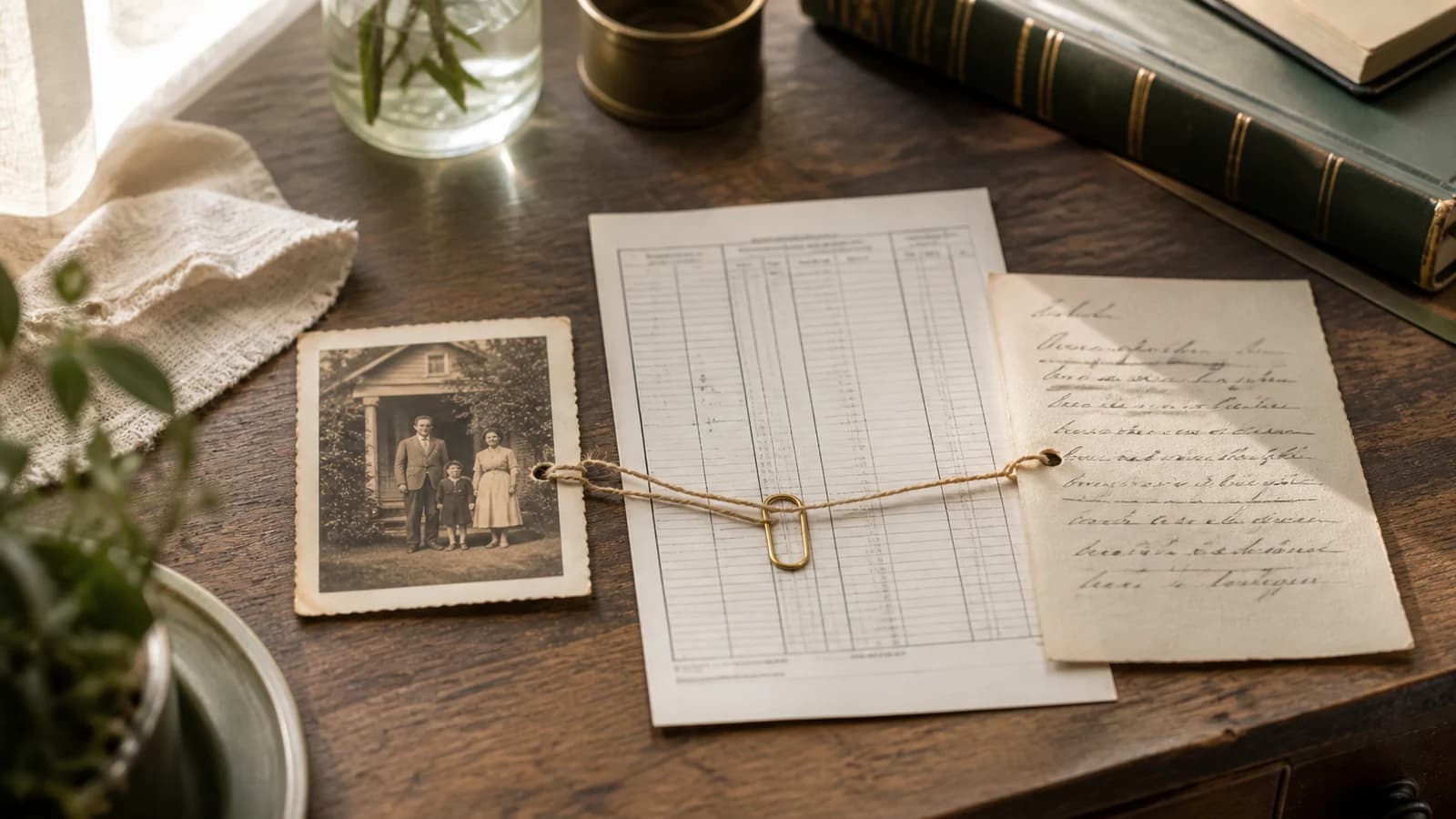
Family stories preserve meaning. Evidence helps test details. A strong archive keeps both visible and clearly labeled.

Relatives do not need genealogy training to make valuable contributions. They can identify people, explain relationships, share memories, locate originals, describe places and traditions, correct mistakes and say what should remain private. A clear, low-pressure contribution process turns family knowledge into material that can be checked, attributed and preserved.

Old photographs can hold powerful family clues, but identifications should be recorded with evidence, attribution, and room for uncertainty.

Preserving family material means protecting both the object and the knowledge attached to it. This guide covers a practical sequence for inventory, description, safe digitization, storage, backup and responsible sharing.

Family stories become stronger when you record who shared them, when they were shared, and whether the details are memory, interpretation, or documented fact.
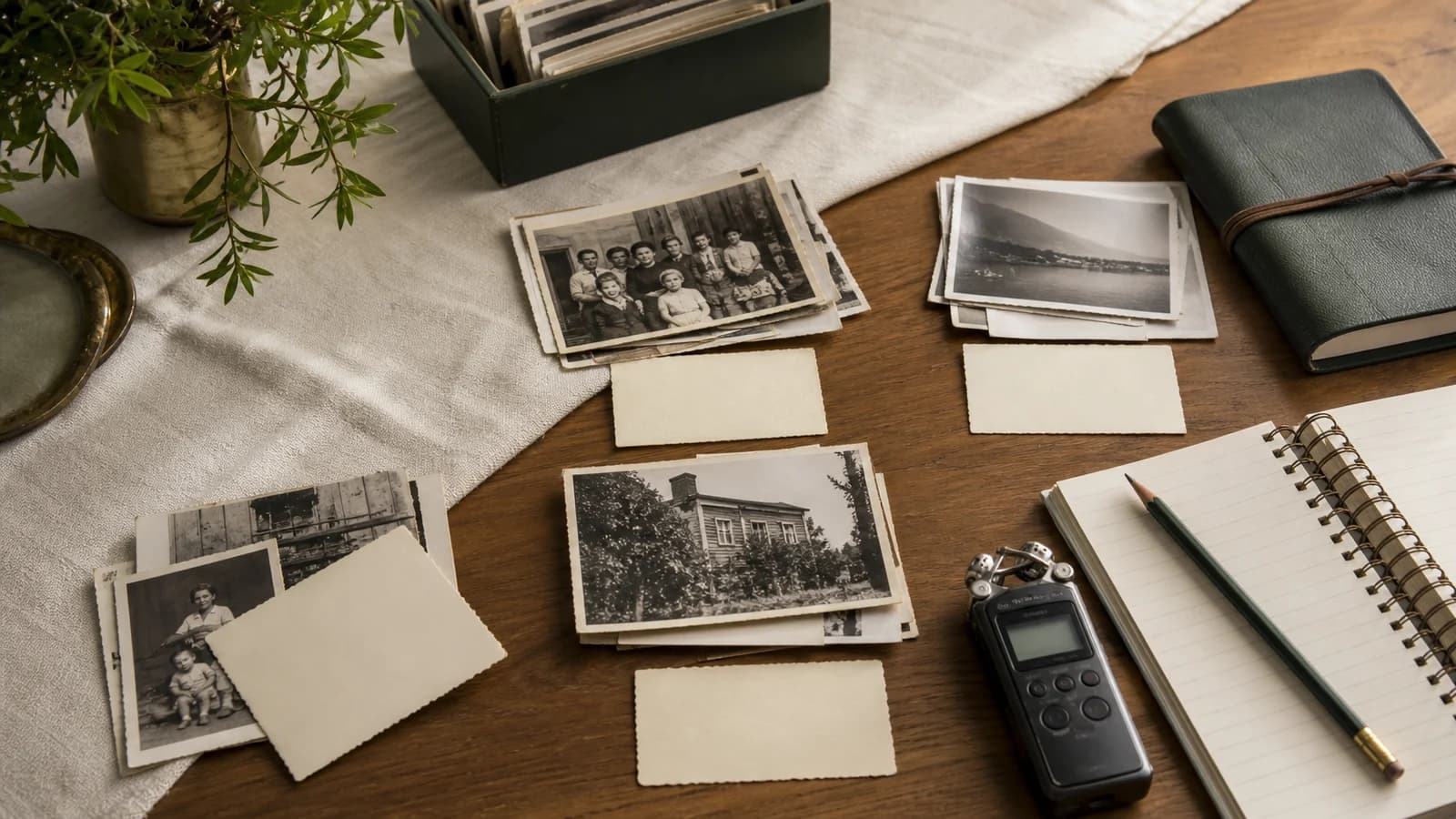
Begin with what you know, label uncertainty clearly, and keep stories beside the photographs and people they describe.

A digital family history archive is an organized home for the records, research and stories that explain a family across generations. It connects a family tree to photographs, documents, memories, places and evidence so that people can understand not only who belongs in the family, but how those lives were lived and how each conclusion was reached.
Continue exploring
Explicit editorial relationships are shown first, followed by shared tags.
Topic collection
A gentle starting point for organizing family-history questions, materials, and first archive decisions.
Explore topic →Topic collection
The editorial collection for evidence-led research planning, source review, and documented conclusions.
Explore topic →