
Build a clear foundation
This topic gathers introductory guidance for families beginning an archive, choosing a structure, preparing materials, and inviting relatives into the work.
Loading route foundation…
Knowledge topic
A gentle starting point for organizing family-history questions, materials, and first archive decisions.
This topic gathers introductory guidance for families beginning an archive, choosing a structure, preparing materials, and inviting relatives into the work.

A family tree shows relationships across generations. A family history archive preserves the sources, photographs, stories, timelines and context that explain those relationships and individual lives. The two are complementary: the tree is a map; the archive is the organized evidence and human history behind it.
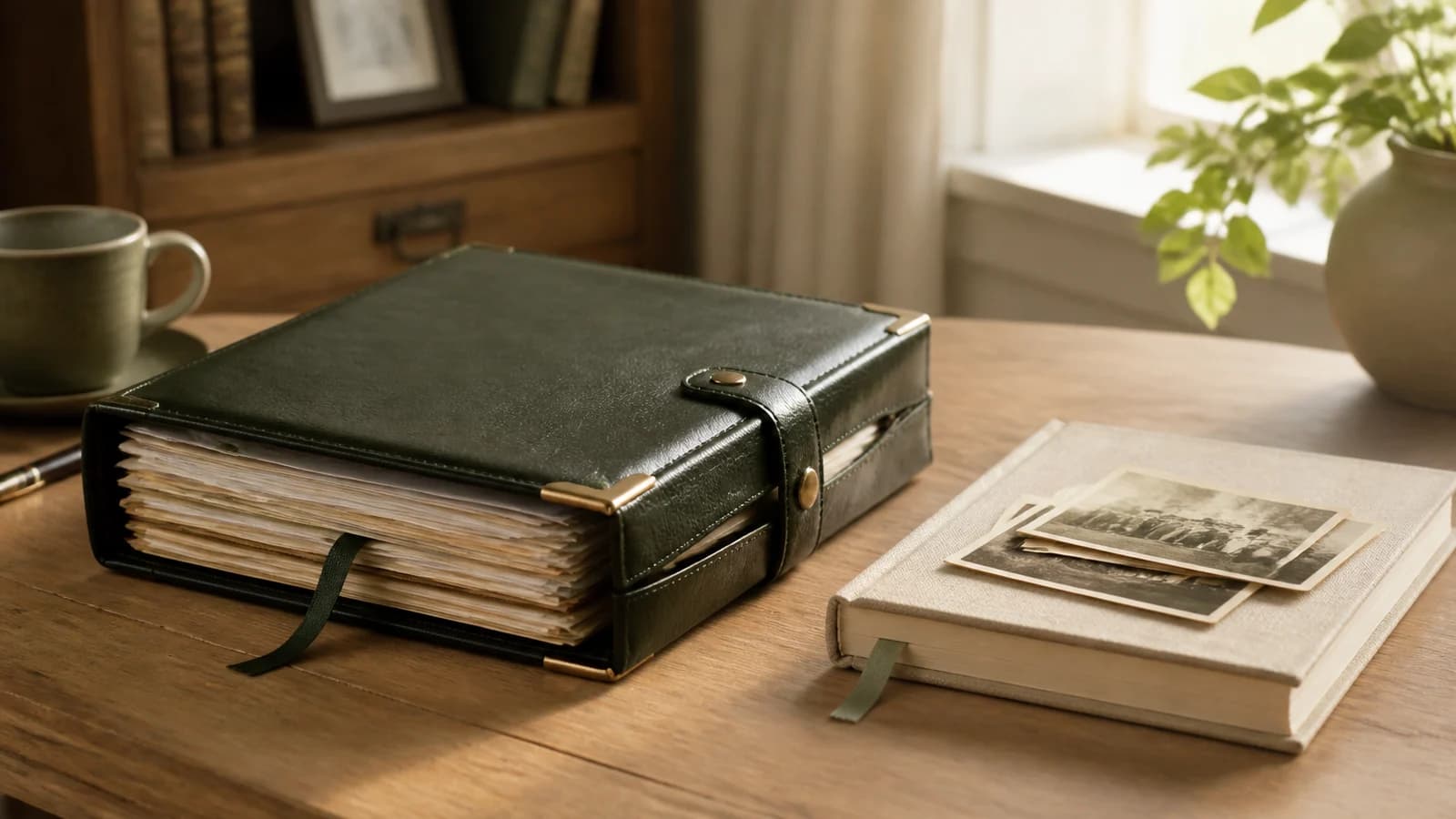
Choose Full Archive when the work needs evidence depth. Choose Lite Archive when the first need is gathering stories, photos, and basic family information.

Relatives do not need genealogy training to make valuable contributions. They can identify people, explain relationships, share memories, locate originals, describe places and traditions, correct mistakes and say what should remain private. A clear, low-pressure contribution process turns family knowledge into material that can be checked, attributed and preserved.

A census record is more than a name match. Read the household, neighbors, headings, dates, and limits of the schedule before turning it into a conclusion.

Family stories become stronger when you record who shared them, when they were shared, and whether the details are memory, interpretation, or documented fact.
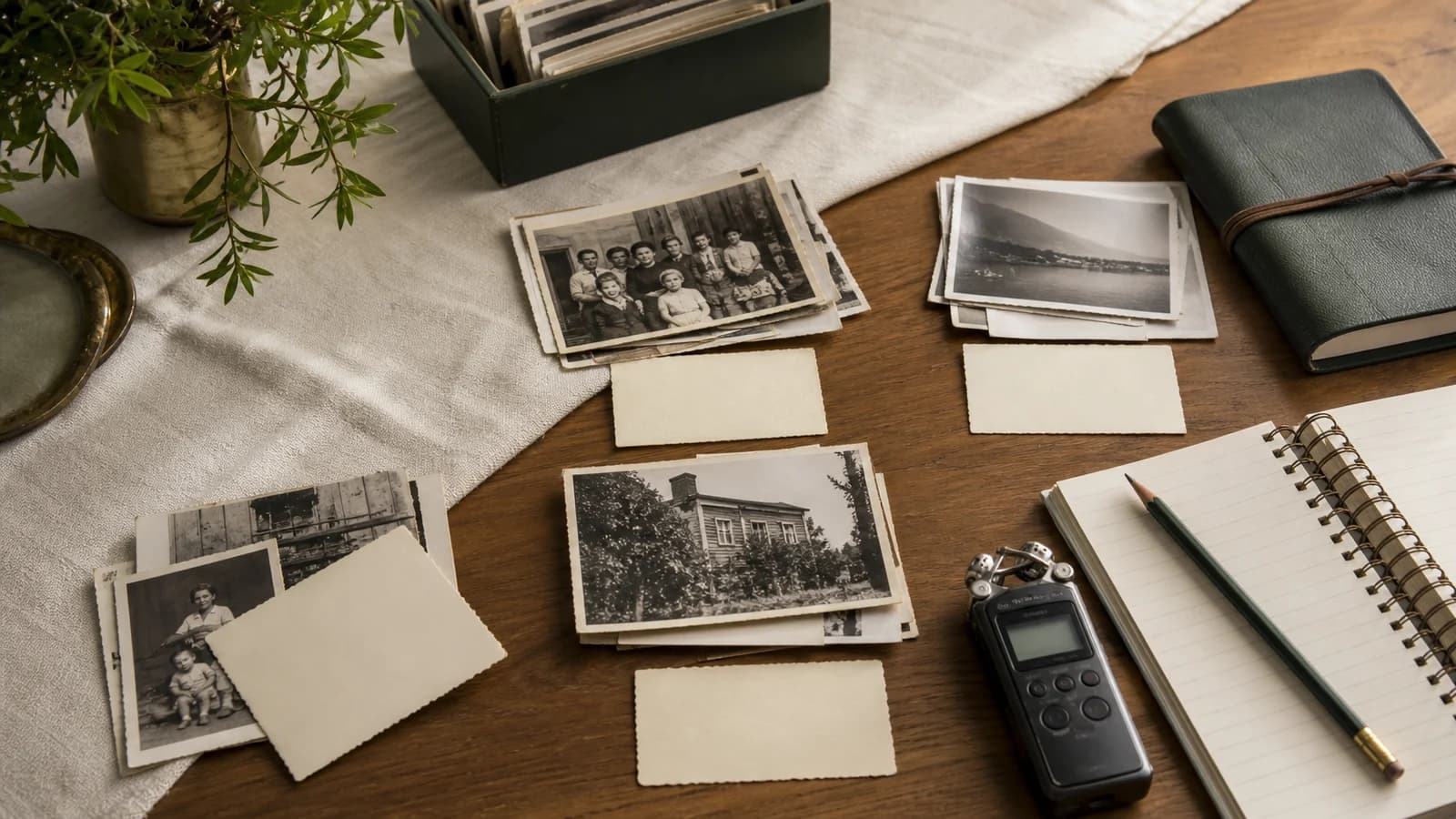
Begin with what you know, label uncertainty clearly, and keep stories beside the photographs and people they describe.

A digital family history archive is an organized home for the records, research and stories that explain a family across generations. It connects a family tree to photographs, documents, memories, places and evidence so that people can understand not only who belongs in the family, but how those lives were lived and how each conclusion was reached.
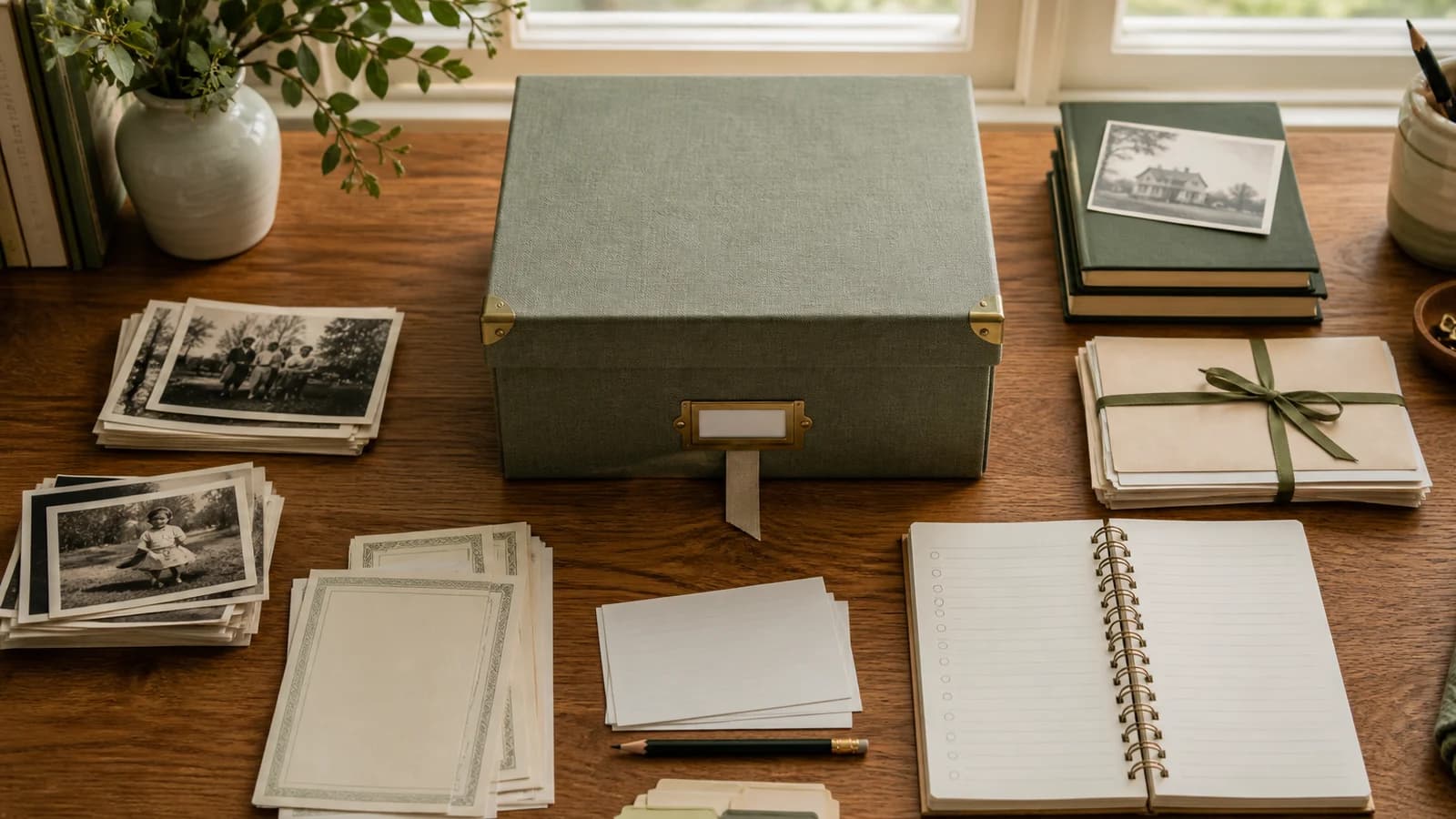
Gather names, dates, places, photographs, documents, family stories, questions, and privacy concerns before a family-history project begins.
Continue exploring
Explicit editorial relationships are shown first, followed by shared tags.
Topic collection
The editorial collection for evidence-led research planning, source review, and documented conclusions.
Explore topic →Topic collection
The editorial collection for organizing, describing, and caring for family materials.
Explore topic →