
Keep the reasoning visible
This topic gathers approved guidance about research questions, evidence, source review, conflicts, and documented conclusions.
Loading route foundation…
Knowledge topic
The editorial collection for evidence-led research planning, source review, and documented conclusions.
This topic gathers approved guidance about research questions, evidence, source review, conflicts, and documented conclusions.
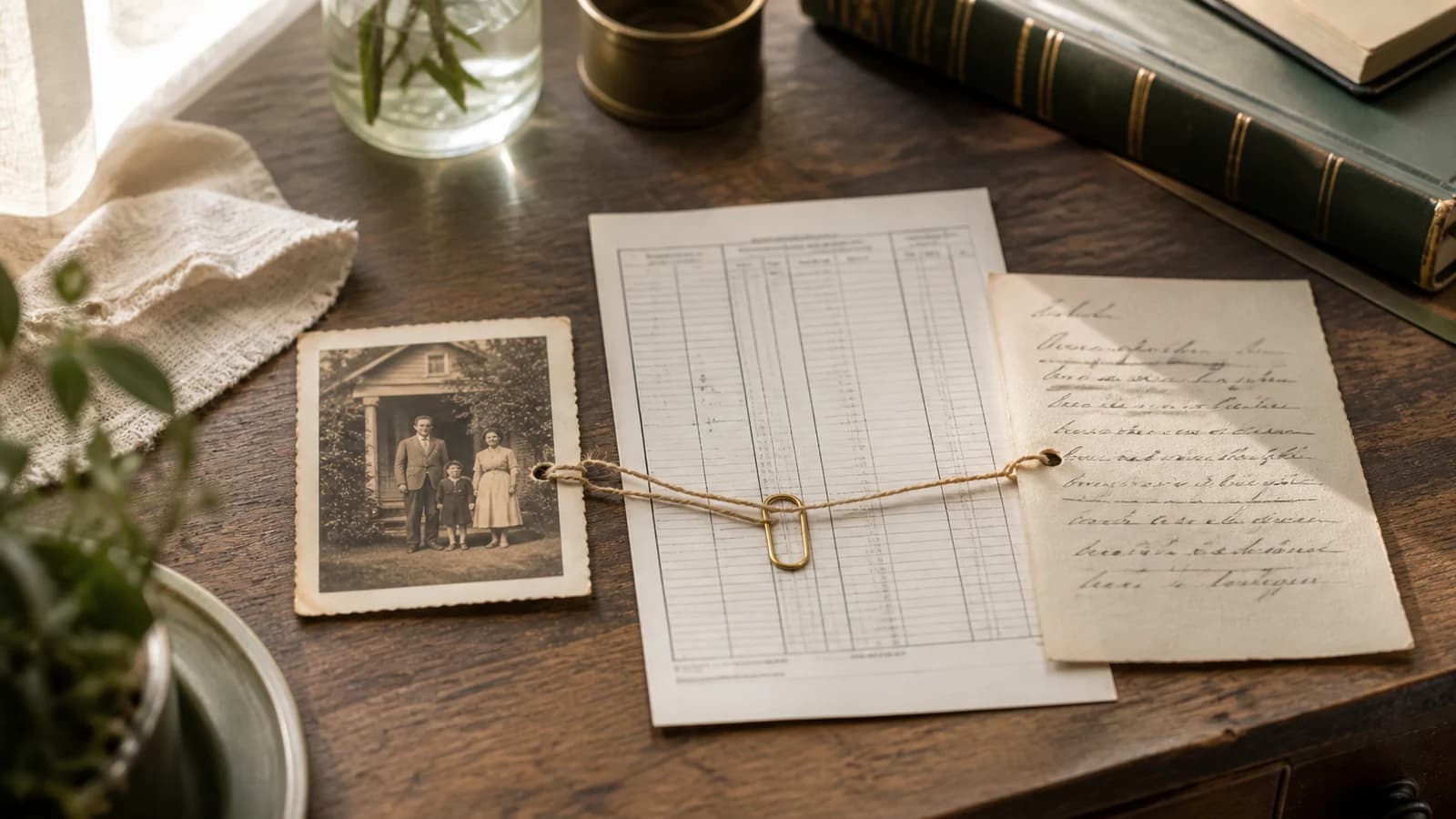
Family stories preserve meaning. Evidence helps test details. A strong archive keeps both visible and clearly labeled.

A family tree shows relationships across generations. A family history archive preserves the sources, photographs, stories, timelines and context that explain those relationships and individual lives. The two are complementary: the tree is a map; the archive is the organized evidence and human history behind it.

A brick wall often feels like a dead end because the question is too broad. A research plan turns the problem into smaller, testable steps.

Source citations do not have to be perfect to be useful. Start by recording enough detail that you, or a future relative, can find the record again.

One census record gives a snapshot. Comparing records across time can reveal migration, changing households, missing people, and new research questions.

Conflicting records are normal in genealogy. The work is not to erase the conflict, but to describe it clearly and decide what the evidence can and cannot support.

Genealogy research needs enough structure to show what was searched, what each source reports and why a conclusion is reasonable. Family history needs room for voice, relationships, place and uncertainty. The answer is not to choose between a database and a narrative, but to connect them through people, events, sources and research questions.

The FAN Club method looks beyond one ancestor to the family, associates, and neighbors who may appear beside them in records.

Gather names, dates, places, photographs, documents, family stories, questions, and privacy concerns before a family-history project begins.
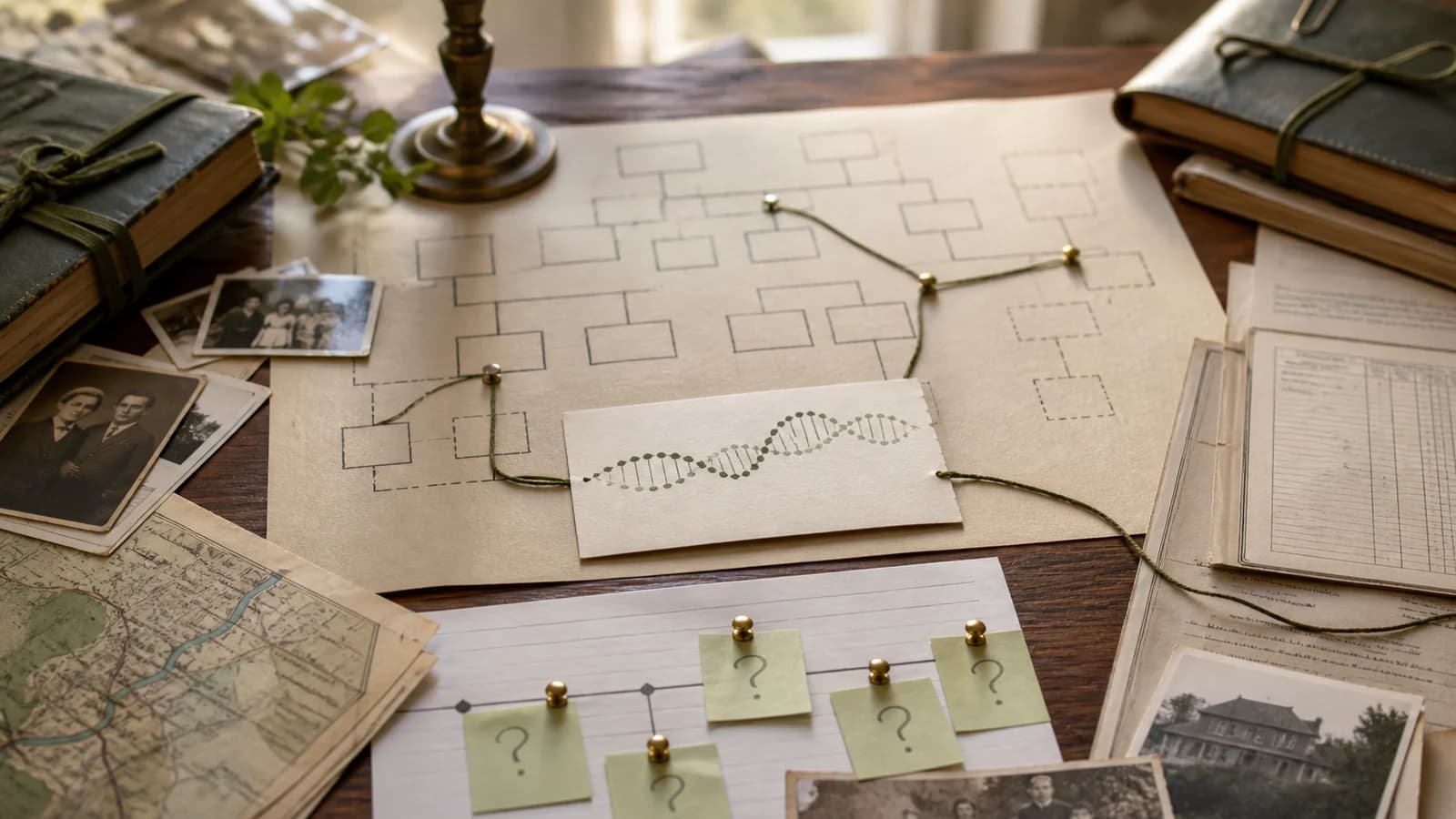
DNA clues can be useful, but they need documentary evidence, family context, privacy care, and careful interpretation.
Continue exploring
Explicit editorial relationships are shown first, followed by shared tags.
Topic collection
A gentle starting point for organizing family-history questions, materials, and first archive decisions.
Explore topic →Topic collection
A careful guide to using DNA matches, shared cM, clusters, and documentary evidence in family-history research.
Explore topic →Topic collection
The editorial collection for organizing, describing, and caring for family materials.
Explore topic →