research methods1 min read
Evidence and Family Stories: Why Both Matter
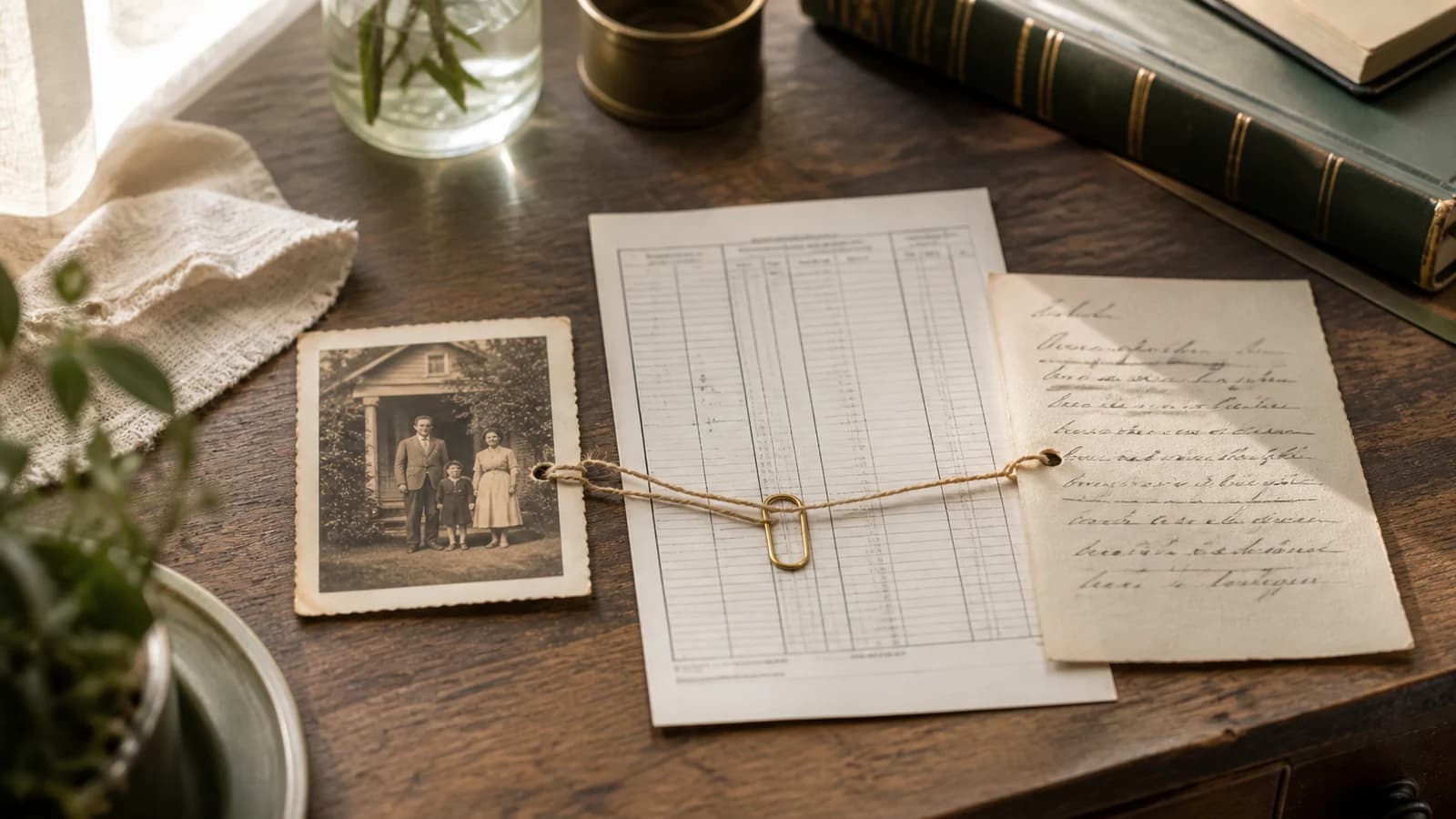
Family stories preserve meaning. Evidence helps test details. A strong archive keeps both visible and clearly labeled.
Loading route foundation…
Knowledge articles
Practical articles appear here when they are ready for public reading. Owner-review mode can also show review-visible guides before ordinary public release.
All guides
This public listing is limited to published articles.
Family stories preserve meaning. Evidence helps test details. A strong archive keeps both visible and clearly labeled.

A family tree shows relationships across generations. A family history archive preserves the sources, photographs, stories, timelines and context that explain those relationships and individual lives. The two are complementary: the tree is a map; the archive is the organized evidence and human history behind it.
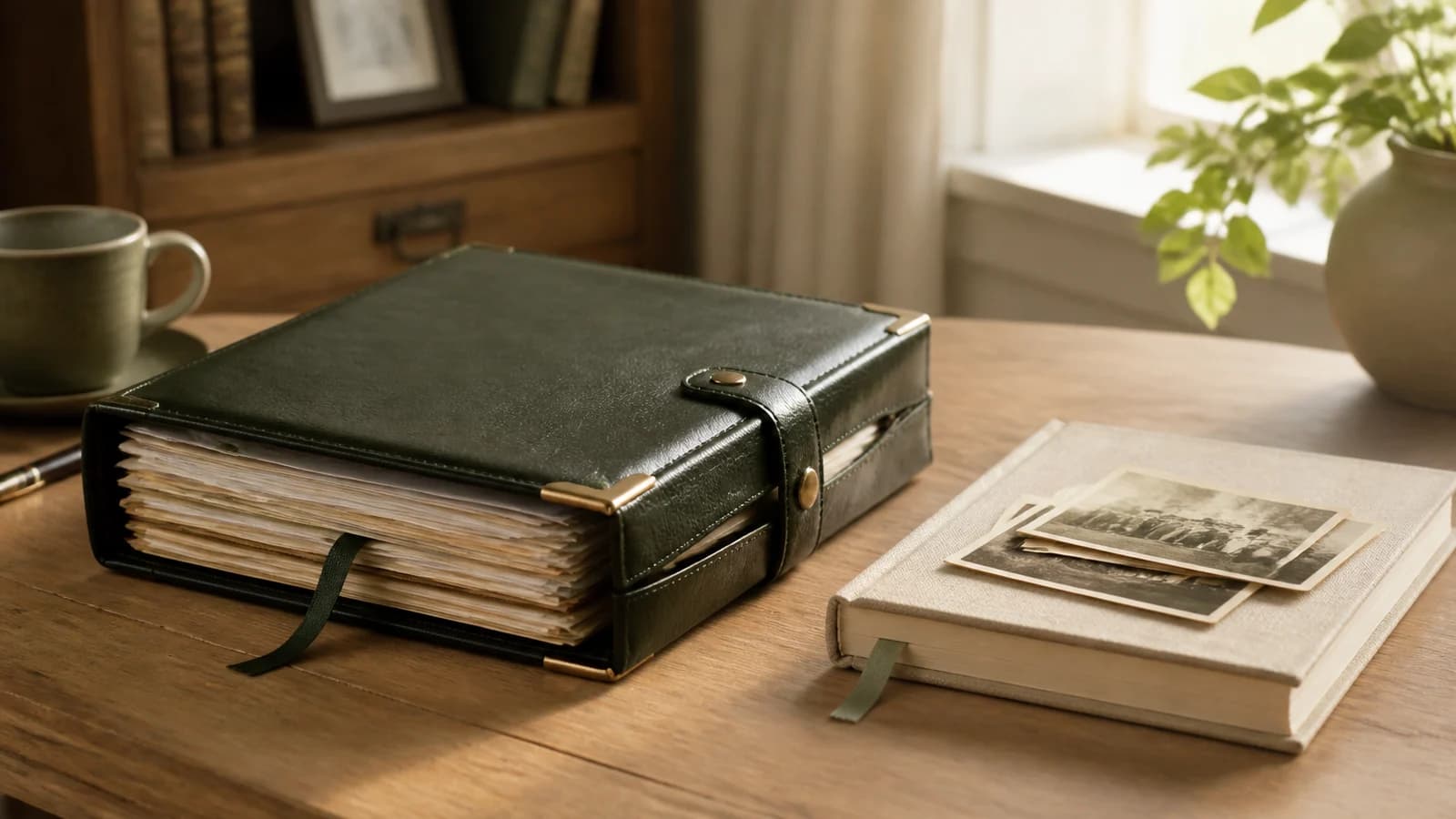
Choose Full Archive when the work needs evidence depth. Choose Lite Archive when the first need is gathering stories, photos, and basic family information.

Relatives do not need genealogy training to make valuable contributions. They can identify people, explain relationships, share memories, locate originals, describe places and traditions, correct mistakes and say what should remain private. A clear, low-pressure contribution process turns family knowledge into material that can be checked, attributed and preserved.

A brick wall often feels like a dead end because the question is too broad. A research plan turns the problem into smaller, testable steps.

Source citations do not have to be perfect to be useful. Start by recording enough detail that you, or a future relative, can find the record again.

One census record gives a snapshot. Comparing records across time can reveal migration, changing households, missing people, and new research questions.

Conflicting records are normal in genealogy. The work is not to erase the conflict, but to describe it clearly and decide what the evidence can and cannot support.

Old photographs can hold powerful family clues, but identifications should be recorded with evidence, attribution, and room for uncertainty.

Genealogy research needs enough structure to show what was searched, what each source reports and why a conclusion is reasonable. Family history needs room for voice, relationships, place and uncertainty. The answer is not to choose between a database and a narrative, but to connect them through people, events, sources and research questions.

Preserving family material means protecting both the object and the knowledge attached to it. This guide covers a practical sequence for inventory, description, safe digitization, storage, backup and responsible sharing.

A census record is more than a name match. Read the household, neighbors, headings, dates, and limits of the schedule before turning it into a conclusion.

Family stories become stronger when you record who shared them, when they were shared, and whether the details are memory, interpretation, or documented fact.
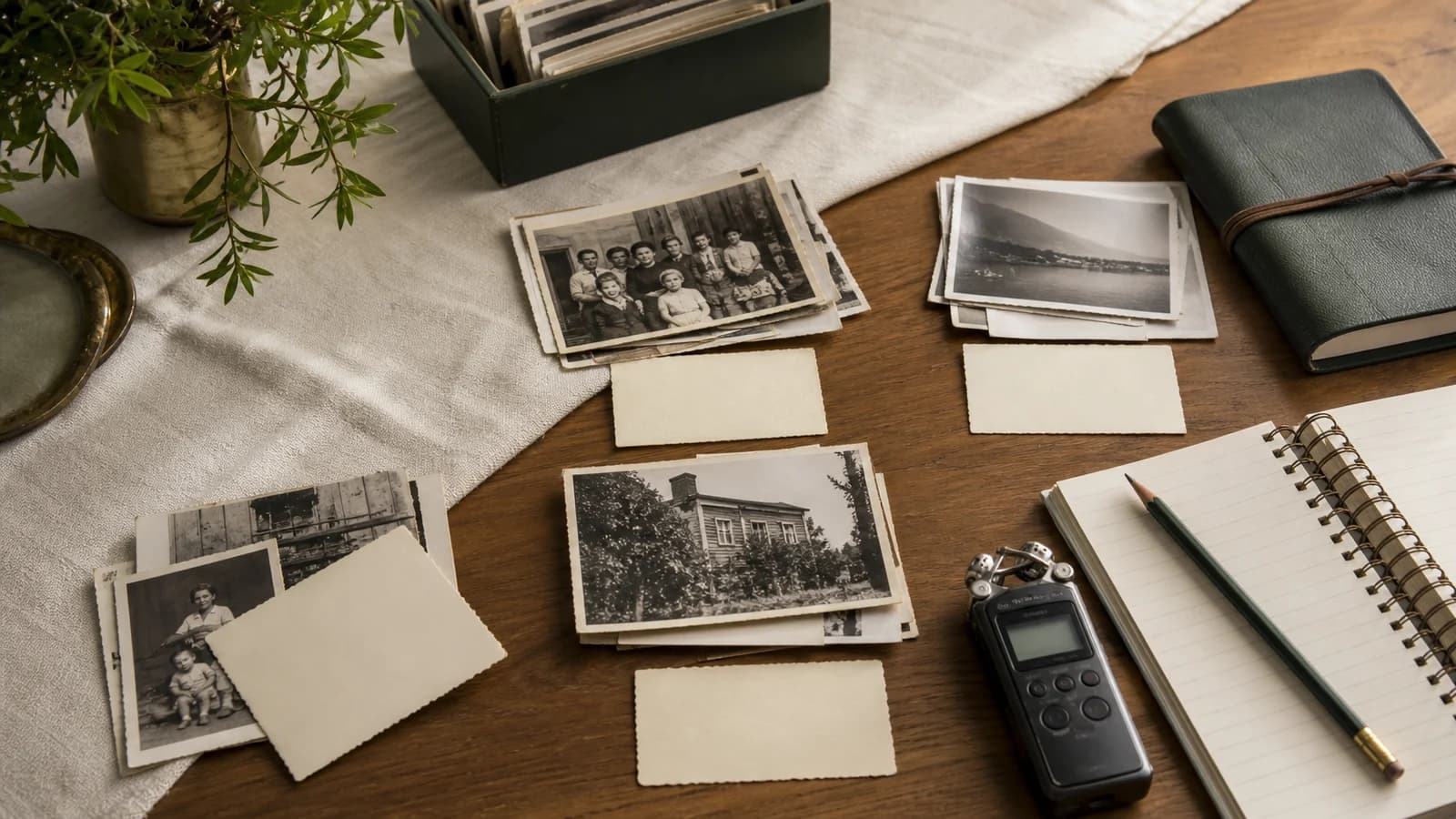
Begin with what you know, label uncertainty clearly, and keep stories beside the photographs and people they describe.

A digital family history archive is an organized home for the records, research and stories that explain a family across generations. It connects a family tree to photographs, documents, memories, places and evidence so that people can understand not only who belongs in the family, but how those lives were lived and how each conclusion was reached.

The FAN Club method looks beyond one ancestor to the family, associates, and neighbors who may appear beside them in records.
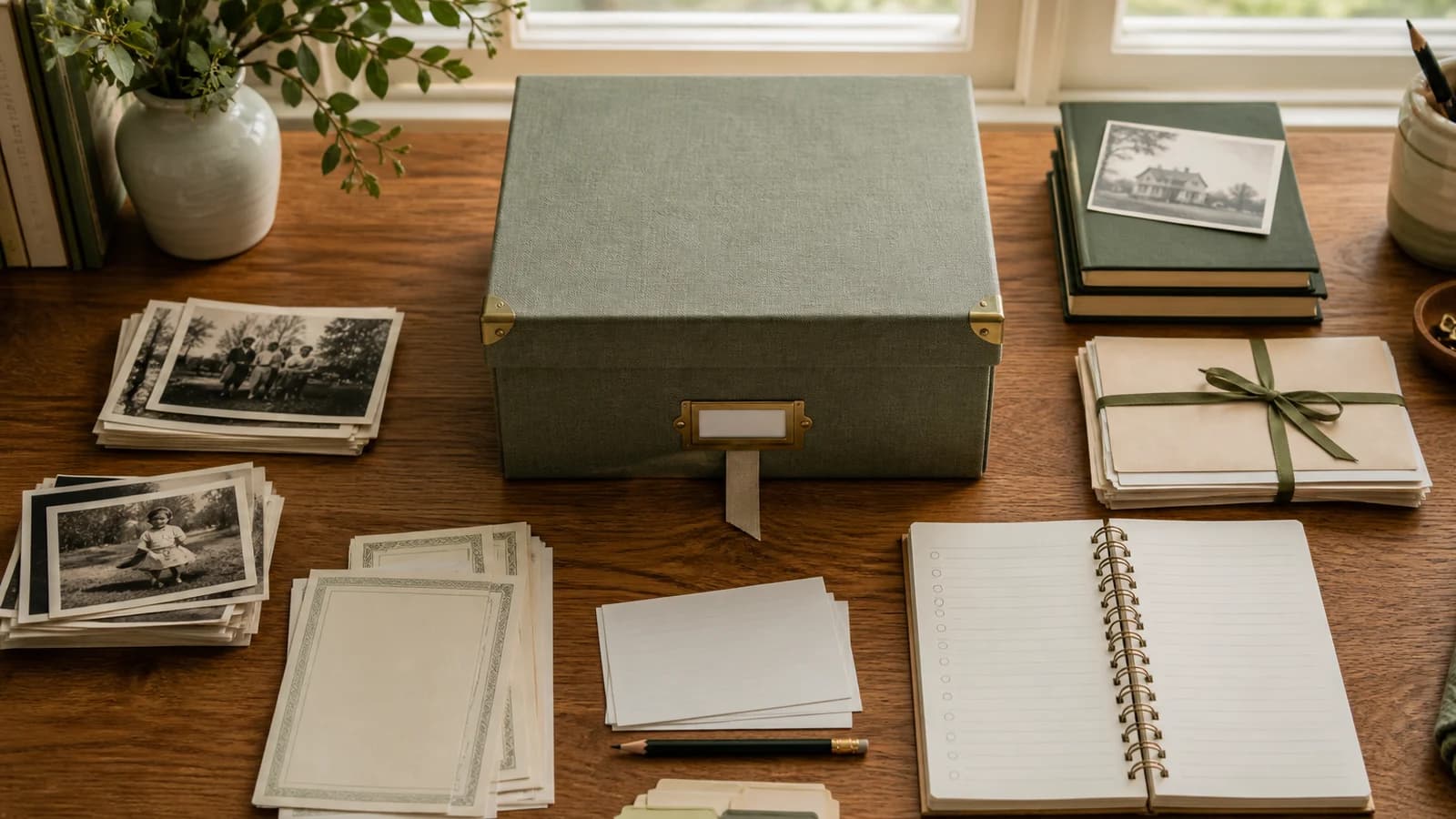
Gather names, dates, places, photographs, documents, family stories, questions, and privacy concerns before a family-history project begins.
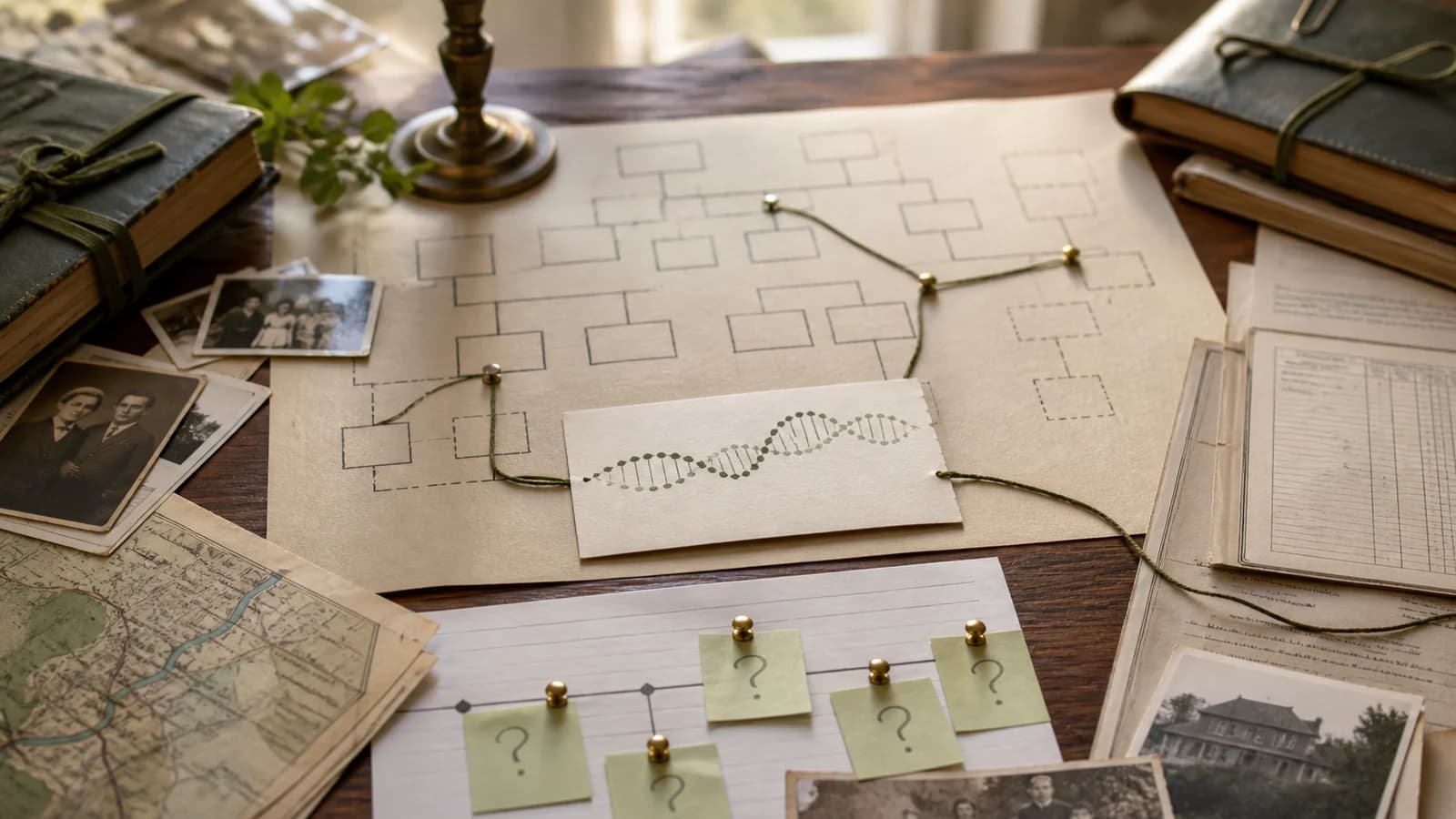
DNA clues can be useful, but they need documentary evidence, family context, privacy care, and careful interpretation.
Knowledge Hub
The Knowledge Hub gathers featured guides, topics, and gentle next steps.
Visit the Knowledge Hub